

Part I of our series: “What are the best things you could do for your child that are not socially approved in upper-middle-class America?”
An economist recounts: “I was driving down a Forest Service road in Montana with a climbing guide, and as we passed a meadow by a stream he remarked ‘when we were kids, every Friday my parents would load up camping gear into the jeep and my brothers and sisters and I would hop in. They’d drive to this spot, we kids would jump out, they’d dump out the camping gear, say ‘see you Sunday afternoon,’ and drive off.’”
Try that today and you’ll meet a caseworker. Yet much of the world never signed our settlement. The Dutch have a beloved scouting tradition called the “dropping”: drive your children into the woods at night - sometimes blindfolded - and let them find their way home. The Japanese send toddlers on solo errands1 and kindergartners on daily commutes across Tokyo, admittedly a far safer city than any in the United States. When Lenore Skenazy let her nine-year-old ride the New York subway alone - once, at his request, with a map, a Metrocard, and twenty dollars - the media crowned her “America’s Worst Mom.” A Tennessee mother I know warned her boys if they missed the school bus again, they would walk to school. They missed it. They walked, with mom trailing at a discreet distance - until a police officer halted the expedition and informed her she would take them, or he would. One Catholic reader raised the ceiling: send a high schooler alone on a multi-week pilgrimage - the Camino de Santiago runs five hundred miles - because rites of passage require “real separation and actual ordeal.”
The first commandment of upper middle class safetyism is Thou Shalt Not Risk. My correspondents are heretics. A Bostonian: “Let them eat off the dirt at a park when they drop some food. Generally a robust set of bacteria to expose them to that isn’t likely to get them sick.” The Scandinavians raise the stakes to the weather - “there’s no such thing as bad weather, only bad clothes” - parking their infants outside to nap below freezing and running kindergartens in the forest year-round. An Arizonan entered his six-year-old in mutton bustin’, clinging “to a sheep for eight seconds in the ring” of a rodeo. A Texan put her boys on ATVs in the backcountry at eight, “as soon as they can actually reach the pedals.” And a rural Southern entrepreneur goes where the upper middle class won’t let even its toys go: “Train your kids to genuine competence with firearms and basic edged weapons under adult supervision from a young age.” (One of his sons became a champion shooter.)
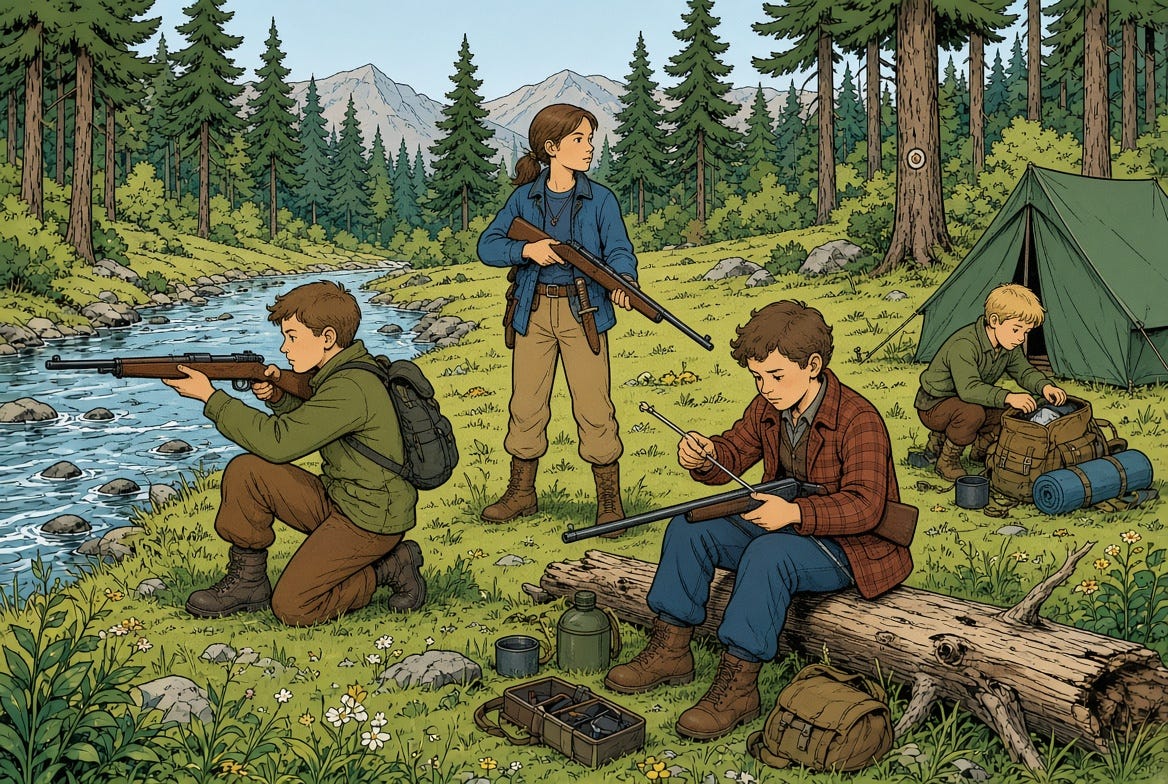
Figure 1. Naturally, the thought of this is so offensive that GPT refused to draw an accompanying image. But thank Musk for Grok!
More broadly, my correspondents urge: let your kids fail. And thus learn. When a child forgets his coat or his lunch or his cleats, he goes without. When he wastes money, he is poorer for it. When he leaves his toy out in the rain, he is down a toy. When he breaks his brother’s toy, he pays for it. A parent supplies sympathy and counsel but not continuous rescue. As Robert Louis Stevenson observed, life is a banquet of consequences, “to which we all sit down, the hanger-back not least.”
Yet perhaps there are no cleats to forget. Multiple parents insisted: “Say no to club sports.” No to the fees, the tournament hotels, the multiple hour drives across multiple states to watch ten-year-olds. The travel team is a tax on family life, first the dinner table, then the Sabbath. Abandon the adult-organized, documented, scheduled activities and instead embrace pickup games, made-up games, disorganized sport. Guard free time the way other families guard practice schedules. Youth semi-pro sports buy a(n expensive) lottery ticket: only a sliver of high school athletes play in college. The apparatus was built to impress a college admissions officer but a play every family runs doesn’t win the game.
Or drop the assumption underneath it - that your child is going to college at eighteen. What if he first spent two years as a missionary, as the Mormons do? Or joined the Marines? One buddy of mine did just that - and wound up top of his class at Annapolis. (Or as one reader suggested, for more action: join the IDF).
Or maybe never go? The college rat race buys your child roughly seven minutes of an admission officer’s attention - for a seven percent chance at a seat. Instead, one Ivy-educated investor half-joked, why not buy your kid an HVAC business and see him out-earn his peers who drank their way through earning a credential? Or fund a master welding certification, which costs less than a semester and starts paying immediately.
Or sprint the other way: be the Tiger Mom the upper middle class fears. Still no to sports, but total yes to academics (and perhaps classical music), compelled through protest and tears, because the child’s future self will thank the parent the child currently resents. Amy Chua wrote a bestseller but got death threats - her book has over 50,000 ratings on Goodreads - an extraordinary amount for a parenting memoir - and only an abysmal 3.67 average. The upper middle class likes the idea of excellence without drills, admiring the result but forbidding the method.
Those answers point in opposite directions but they reject the same thing: the standard, resume-calibrated schedule that is busy without being excellent. (It may not be crazy to suggest that if a child isn’t in the top (5%?), to consider the opportunity cost.) They also indicate it’s impossible to implement every suggestion - the real exercise is ranking which heresies you’d actually try.
“Spank your kids” was among the most popular answers I received - and used to be how parents (and teachers) ensured attention and discipline. Modern (liberal) academia recoils: the meta-analyses tally correlations with worse outcomes while lumping together angry beatings with calm discipline. No review board will permit a randomized controlled trial today, and only so many parents would volunteer to be randomized. Scripture is not so squeamish: “He who withholds his rod hates his son.”
The upper middle class prefers to negotiate with tiny terrorists than demand first time obedience. My dissident correspondents reject the medicalization of childhood, where kids are either drugged up or trained to treat ordinary difficulty as pathology, endlessly investigating their own feelings. If you ask children to scan themselves constantly for symptoms, they will find them. Hence the most anxious generation on record emerging from the most abundant society. Dissidents recommend instead stoicism, “walk it off,” and “get up - you’re fine”
The same correspondents think the upper middle class is far too tolerant of individualism - a class that preaches “follow your bliss” while its children converge on the same schools, trends, and slang. One devout dad: “Don’t let your kids dress gothic, dye hair.” A mom bans makeup. An educator goes further: “Cultivate in [your children] a deep aversion to vulgarity in all its forms. They should be disgusted by tattoos.” A lawyer attacks the appetite itself: “Make them wait on that thing they want for a couple of months and see if they still want it.” An investor practices toy poverty - politely decline gifts from relatives and well-wishers and any new toy costs an old one, given to Goodwill. In the meantime, kids can use their imagination. Or read a book.

Figure 2. Whom would you rather parent?
I’ll conclude this email with a pair of LLM suggestions: “practice austerity in praising your child.” Tell your kids the truth: the essay is mediocre, the recital was average, he is not gifted at everything, and your love is not contingent on pretending otherwise.
And, for an especially wild one: when I pressed Claude for contrarian views, it suggested “Stop playing with your children.” It explained:
“David Lancy’s ethnographic synthesis finds that parents serving as children’s playmates is a bizarre, recent, WEIRD [Western educated industrialized rich democracy] anomaly — in most cultures across history, adults did not get on the floor and play; children played with children, and joined adults in adult work. The [upper middle class] treats floor-time play as the very currency of love and its absence as neglect. The alien consensus: the parent’s job is to be an adult worth joining, not an entertainer.”
Tune in next time for more, starting with: Have your child slaughter tonight’s dinner.
This has been the subject of a hit Japanese TV show for three decades. Netflix now streams it as Old Enough!