
The wrong main characters

The Gist: How conservative history could go right
Part two of a two part series. Find part one here.
While there genuinely is a lot to be proud of in American history, the fundamental conservative error is presenting American history as a glossy brochure, overreacting to leftist critiques with an overabundance of patriotism that fails to be critical of people and events from our own values and thus often, ironically, embracing leftism with a speed limit.
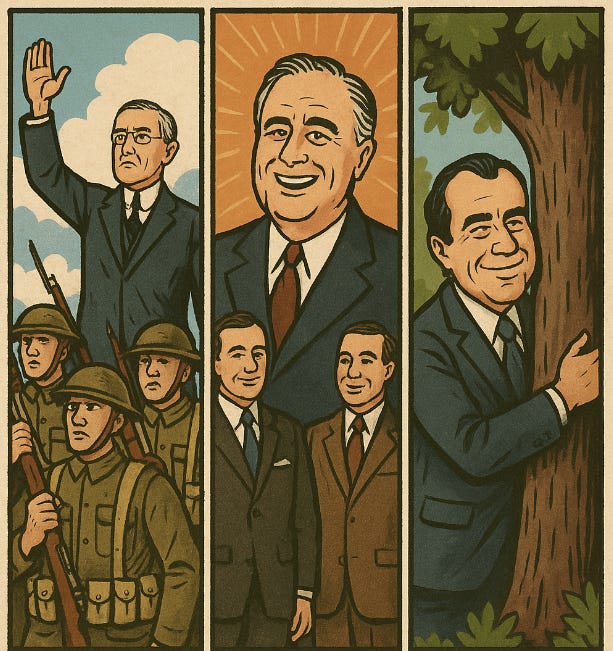
Figure 1. Woodrow Wilson, making the world safe for democracy! Franklin Delano Roosevelt, restoring confidence in our economy! Richard Nixon, founding the EPA to save the planet!
Surveys of American history tend to wind up as histories of government employees (particularly presidents) with nearly everyone else appearing when they are lobbying the state (inevitably righteous social activists), being regulated by it (selfish, ruthless businessmen), or serving as illustrations of the need for regulation.1 Conservative works do not correct this nearly as much as one might expect, still retaining the familiar centerpiece of politics in a country whose population long had one of the lightest government burdens in the history of the world.2 Presidents present an easy, human, interesting narrative to follow - but who did more to affect life in the United States: the 20th most significant president (someone like George H.W. Bush or William Howard Taft3) or the 40th most significant inventor (someone like Elisha Otis, who made elevators practical, enabling a vertical transformation of America)?4 How many history books present a sympathetic story of some American facing a problem - and then present a solution not from the government but from an entrepreneur who figures out how to provide a product or service completely new - or cheaper and better than before? As history is currently told, it misdirects elites to aspire to fix problems via government instead of civil society.5
We inherited a form of history from when it was commissioned by monarchs to glorify themselves and their ancestors (and besmirch whatever dynasty they unseated) and, more significantly, covering centuries in which not much happened6 other than political and religious conflict - but United States history coincides with exactly when the world got richer and advanced technologically at a rate and scale greater than ever before. Alas, the typical historian is an innumerate humanities major with no grasp for science and a negative understanding of economics7 and religion, precisely the two things that most conservatives would consider most important. Tragicomically, one of the real ways in which the U.S. government has been extremely relevant to the development of commerce in the U.S. - the history of American currency - has historians barely able to string together coherent sentences. Practically no historians have actually run businesses themselves, much less very successful ones; they are cloistered intellectuals secluded from what makes capitalism tick or the headaches of management or the risks of entrepreneurialism, often hardly even involved in the selling of their own books (to the degree their books sell at all). If you would not entrust your retirement savings to a historian, what makes you think he understands how the world works?
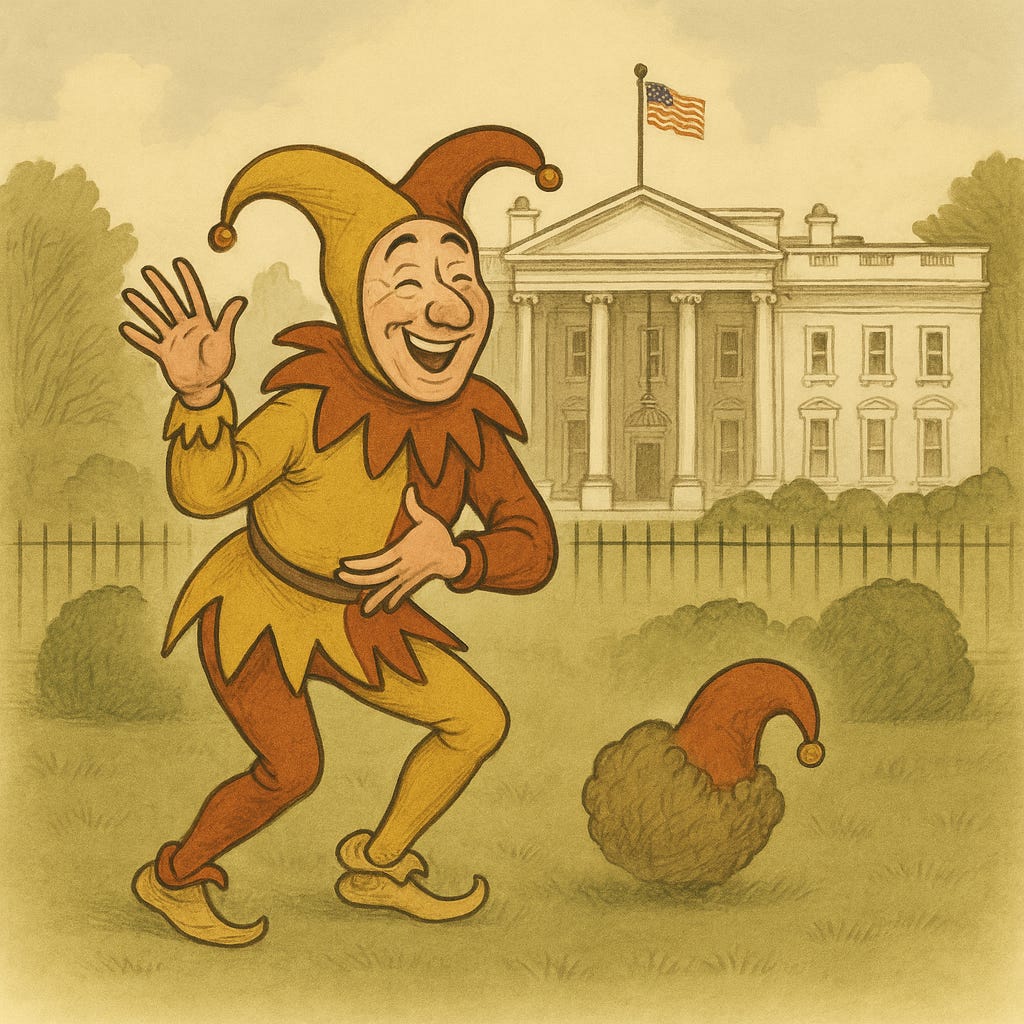
Figure 2. The court historian is only slightly more serious than another court profession while, alas, missing all of the other’s irony.
The vast majority of history texts treat religion anthropologically8, with the only truth being that people claimed to believe it, and usually you’ll get some nods toward the first couple Great Awakenings in the United States before religion nearly completely disappears from the American experience, except as an occasional stumbling block to progress - never mind that faith has been remarkably resilient, especially compared to Europe. Leftist history can be explicitly hostile, but mainstream history is just dull and contentless, as ever trying to avoid controversy.9 But not taking religion seriously means a failure to understand most American historical actors. Can anyone understand the motivations of generations of Americans without understanding the substance of biblical (Protestant) orthodoxy? How many modern “educated” Americans can describe Puritan religious beliefs on their own terms, as opposed to a caricature?10 Or explain the differences between Protestant denominations? How did Darwin affect mainline Protestantism? Children still memorize the Gettysburg Address - but can they draw its biblical allusions? Why exactly was there Protestant-Catholic tension in the United States and why was it so urgent and spirited? American history coincides with the rise of Jewish accomplishment; what characterized the Jewish experience in America and how did it change over time? What was at stake in the fundamentalist/modernist controversy?11 How did elite religious institutions like Princeton lose their religion? Contrary to the standard story of constant march toward secularism, how has faith ebbed and flowed? How have denominations suspended their intra-religious conflict to fight secularism, and to what degree and where have they succeeded and failed? How and why did the courts start taking such a hardline on religion and public life? How have the latest waves of immigration affected American belief? These kinds of questions are not only essential to answer in understanding the American experience but, to the degree you believe, affect the eternal fate of souls. At the same time, conservatives should be careful also not to engage in false nostalgia, such as overstating the orthodox Christianity of certain leaders (or the general population).
A related query: How many American histories treat the decline of the family and religion with the same moral urgency and drama as the recognition of civil rights?12 To be more pointed: how many happily married people would sooner give up their right to vote than their spouse and children? (The fact that I have to specify “happily married” signals the modern problem). From landing on these shores, for generations, most Americans did not vote or even agitate for voting but they did make religion and family their lodestars. Is there anything more significant to one’s daily life, one’s pursuit of happiness? To the degree that this is covered at all, it is part of a celebration of individualism (atomization) and secular tolerance (an atheist state). But how did we get from the married Puritans having 9 children per woman to a birth rate below replacement without immigration, and, alas, a substantial portion out of wedlock? Any history ought to treat the invention of birth control as absolutely monumental - and shifts in marriage law are more important than just about any other. And if we’re trying to understand how America changed, it’s crucial to understand (and criticize) both the development (deterioration) of education and popular culture, importantly, aided (abused) by modern courts.
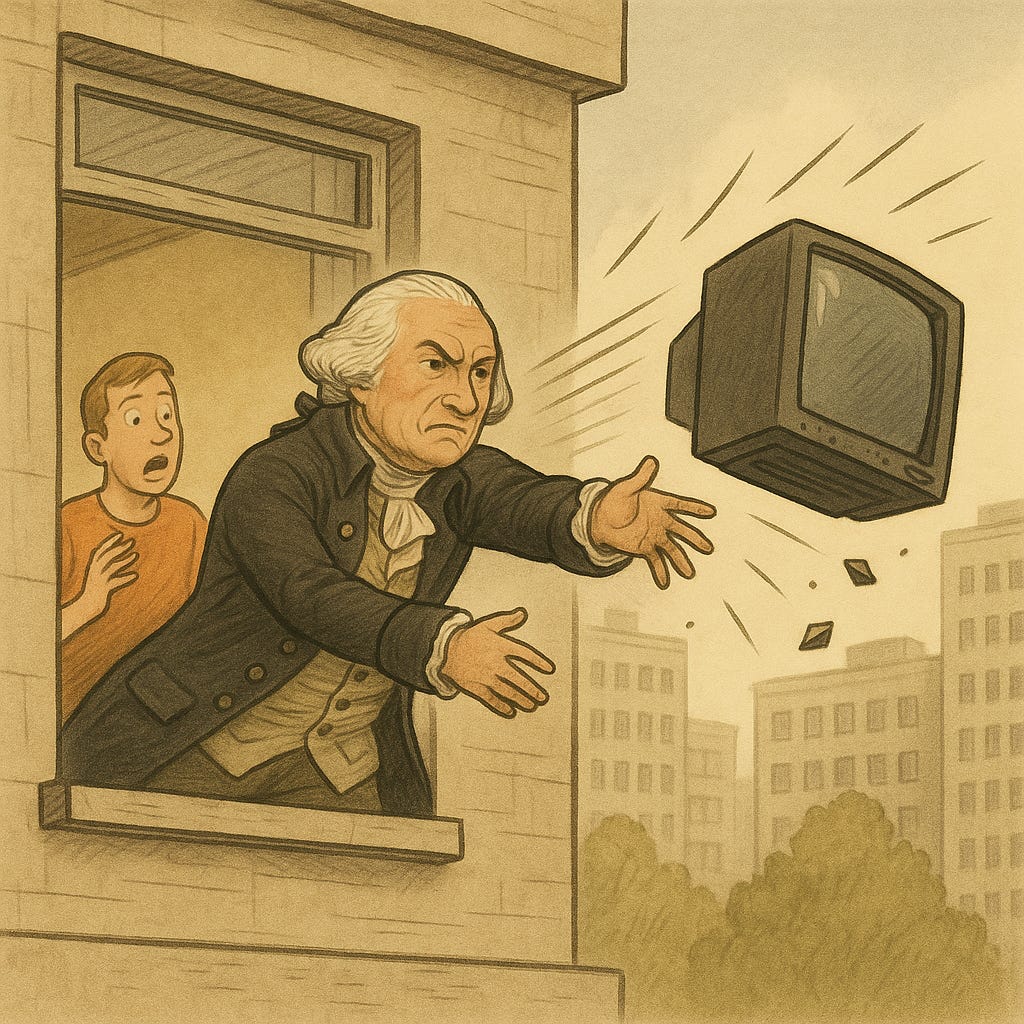
Figure 3. You may fear the prospect of your mother discovering your browser history - imagine if your Founding Fathers did! And note that they would be scandalized by network television
What history often misses in its presentation of facts is exploration of ideas, especially right-wing ideas.13 So, for example, the typical presentation of the Cold War in American history hardly comments on the weirdness of the alliance between the free United States and Communist Russia in WW2 but notes the growing tensions between the powers, dutifully condemns McCarthyite overzealousness, heroizes Kennedy amidst the Cuban Missile Crisis, laments Vietnam in detail through the prism of the protestor, hopefully credits Reagan with a military build up that helps bankrupt the USSR. It’s obviously possible and desirable to present a different story that condemns American naivete in conditioning WW2 aid to the UK but not the USSR, highlights Whittaker Chambers, etc. But if given limited time and forced to prioritize, I would instead want Americans learning about the Cold War to know two categories of things: first, the evils of a totalitarian ideology that murdered millions and oppressed billions. Given that Communism presented such an existential threat to our way of life, Americans should know above all why that was very very bad: it’s much more important to know about Aleksandr Solzhenitsyn’s Gulag Archipelago than it is about nearly any aspect of US-Soviet relations; likewise the details of Mao’s Great Leap Forward than US-Sino relations. Second, why Marxist theory was wrong - even to the degree those insights come from abroad. In particular, again, to properly understand why it was important for America to triumph in the Cold War, we should understand Austrian economics - how Eugen von Bohm-Bawerk savaged Marx’s labor theory of value and how Ludwig von Mises challenged how any Marxist system could actually function without prices (in reality, they literally had to consult western catalogs). Historians teach the Cold War as if it were a chess game between two states, not a world-historical confrontation between a free society and a murderous utopian ideology - conservatives ought to do different. And, to that end, conservative history should explain why America has been successful, e.g. a vast internal free market with secure property rights, incentives for profit-seeking that drove innovation, competition that created consumer benefits, etc. This may feel foreign - and indeed, I am literally suggesting foreign history be taught in American history - and some may argue that these topics are for other subjects - but one cannot understand American history without them - and, indeed, economics, as an example, is already integrated into the telling of American history, it just happens to generally be bad economics.
History telling also tends to overweight headline events - individual elections, pieces of legislation, an invention - and underweights slow variables - demography, norms, technological take up.14 You may have a loose idea of when Thomas Edison perfected the light bulb - but just as significant is how long it took to get widely adopted (and what’s particularly amazing about the U.S. is how consistently and quickly such huge life improvements are able to spread to the masses, especially comparatively). Alas, the human mind prefers tidy human drama to long-run statistics, and historians often indulge this bias. The result is a narrative that presents confident causal links where the real drivers may be random, accumulated incentives, or structural forces barely mentioned in textbooks. It’s also extremely hard to weave in backstories - like how entitlements began in 1776 and continuously ran into problems well before modernity or the nuance of how we got a central bank well before its biggest crises. Or how many histories effectively demonstrate when Chicago and Los Angeles became significant cities? There can be real problems in stringing together a narrative with so many threads - politics has a certain natural rhythm that one can follow from one development to the next, and some important technological development can feel like an interruption while pursuing different takes too far chronologically can make it difficult to reorient focus back toward another important topic.
An ideal American history may actually consist of the story of the American economy and household - the people who produced, traded, built, invented, married, raised children, honored God. Government can appear as it appeared to most Americans before the 20th century: as an occasional interruption in the real business of living. Why shouldn’t the Industrial Revolution and its titans - on their own terms, not merely as targets of antitrust and regulation - be the central story of American history? Even as government intrudes, shouldn’t we spend at least as much time with Bill Hewlett and David Packard in their Palo Alto garage as on another alphabet soup New Deal program? Obviously, the intention here is not to undercut the brilliance of the American political system, but to reinforce it: the constitutional order created a vast zone of freedom in which ordinary people and extraordinary innovators could transform daily life on a scale unmatched in human history. Aside from the mail, which most people had to pick up rather than get delivered to their home until the end of the 19th century, the federal government barely existed to most Americans most of the time.

Figure 4. Imagine that innocent time - barely over a century ago - in which you did not enjoy the pleasure of the highly interested, personal attentions of the IRS.
To that end, there’s a significant problem in telling a national history because the frame encourages the centralization and homogenization of American life - as though American life were lived in Washington D.C. rather than in thousands of towns and mostly rural counties governed - for better and worse - by local laws and customs. For most of American history, you didn’t live under ‘the federal government’ - you lived under your sheriff, your pastor, your neighbors, and your boss, though that may have been your father until you struck out on your own. We moderns have become so obsessed with race that we miss the substantial regional cultural differences between people whose ancestors came from different parts of the United Kingdom, much less the rest of Europe. A president may scrape together 51 percent of the vote - or less!15 - and historians will still confidently explain the politics of an era on the basis of one individual whom half the country opposed. Relatedly, presidents are not monarchs, but they might as well be when they are the action heroes at the center of so many American historical surveys - in the 19th century, you will occasionally see major figures of Congress but they quickly fade into the background even as the three branches of government persist. How many Americans who can name five presidents before they were born can also identify five significant members of Congress or the Supreme Court? (How about non-federal politicians?) And, of course, the vast, growing administrative state only gets so much attention as it expands into American life and beyond the reach of presidents - never mind the gigantic role of the Federal Reserve, which might as well be a conspiracy theory, rather than a real institution, given that it affects the allocation of trillions of dollars but hardly merits mention in the typical American history outside gigantic economic problems (that it may have helped create!)
American history surveys written by self-identified conservatives obviously do not generally go as far as I am suggesting in rejecting the political frame - but even within the political frame, they are not nearly revisionist enough. Sometimes they are blindly partisan, bizarrely upholding self-identified progressive regulator Theodore Roosevelt as great just because he’s a Republican or dismissing budget-balancing national-bank-slaying Andrew Jackson because he was a Democrat.16 More routinely, they embrace patriotism at the expense of our values, bragging about America adopting a policy that contemporary conservatives bitterly resisted. More complicatedly, a big problem is that conservatives disagree about what constitutes conservatism - so that conservative history also can be too nationalist at the expense of liberty, fully embracing the Federalists over the anti-Federalists, painting Lincoln hagiographically rather than with nuance, etc. Paul Johnson’s History of the American People may be the best single volume of its genre, but he still argues the dubious proposition that America needed an income tax to become a superpower. One intellectual advantage that liberals had for so long is that because they felt alienated by America, they developed their critical faculties. Conservatives should critically engage the decline of the family and growth of government in our history. Even something like the Constitution is magnificent but not inerrant Scripture; while we would all be better off if we were faithful to its original meaning, even that original meaning has some problems (e.g. the Founders, used to the tension between a king wanting to spend and a parliament elected by a limited franchise resisting, did not very well anticipate the effects of an elected executive compromising with legislature by agreeing to spend more and more; nor did they anticipate federalism causing problems in marriage standards; etc.). At the same time, conservatives should not veer too far into pessimism - the United States remains the best place to ever live, we have a lot to be grateful for, and virtuous citizens can make the most of it (even if we’d like to shape the country to better support virtue and how much more they can make out of it).17
There’s also another player in this space: Libertarian revisionist history is generally more intelligent and certainly more economically literate than most alternatives - alas, conservative history bestsellers tend to be pretty dumbed down; the smartest rightwing revisionist history comes in legal briefs about originalism and could be better incorporated into mainstream conservative history. But the fundamental flaw of libertarian approaches to American history is the premise that the country could have existed, much less thrived without violence. Many libertarians would have rendered us a small, divided, vulnerable nation on the eastern seaboard rather than the vast, free country manifestly destined to greatness. Libertarian histories can undervalue or ignore that creating and maintaining zones of effective liberty requires state capacity for defense and sometimes strategic territorial expansion. But the converse problem of conservatives is jingoism - not every conflict America has entered is a good one - and World War I is a great example where it’s extremely difficult for me to justify how any remotely right-leaning take can treat it as anything but a disaster (and yet one can read in conservative sources a celebration of the doughboys going to the aid of the country of Lafayette). On the other hand, I am a big fan of James Knox Polk, who ensured that the Constitution was in effect from sea to shining sea rather than from sea to muddy river - and did so with a volunteer army. His accomplishment ought be celebrated rather than denigrated or, more often, forgotten.
Libertarian history is more attentive to and celebrative of civic society - like mutual aid societies that existed before the welfare state - but, in the pursuit of individualism and liberty, can dismiss the sinful nature of man, the prerequisite importance of order, and the desirability of a thick social fabric of virtue beyond self-interest. I think it’s perfectly plausible that had the government remained roughly as it was and not robbed (primarily through welfare) many Americans of the better dependencies and sources of meaning in their life - a spouse, a church, a job, a community - it’s plausible that self-interest would reinforce virtue. But it’s unclear how many social mores are recoverable and moderns should be attentive to the prospects of subsidized deviancy. And libertarians, who are especially enthusiastic about immigration, should be attentive to the American cultural foundations that allowed markets to thrive, especially shared norms, social trust, and human capital quality willing to defer gratification. Liberty is not universally workable regardless of cultural context, shopkeepers need sheriffs and shrines, and “the individual is incomplete,” as the historian of the family Allan Carlson has observed. The Democrat Senator Daniel Patrick Moynihan observed that “The central conservative truth is that it is culture, not politics, that determines the success of a society. The central liberal truth is that politics can change a culture and save it from itself.” As for his second point, TBD.

Figure 5. Too many libertarians want every police officer and soldier to be a G-rated Sheriff Andy Taylor while civilians enjoy NC-17 lifestyles - and still expect the stability of Mayberry.
Alas, while I can sketch what history should look like, I can’t claim to be fully satisfied with anything that’s available - and, in fact, I am disturbed by how little heterodoxy is out there, even at homeschooling conventions presumably filled with conservative consumers. Even were I to publish my own version, I am myself deeply interested in politics and my mind is drenched with American political history, so I am not sure I could fully pursue what I have recommended - I am not even yet certain that one can coherently bring together all the important threads (economics, religion, technology, family, federalism, demography, etc) in a single work. The good news is that material exists (I have tried to review quite a bit of it on this substack!); the bad news is it might require a lot of reading to understand a country as large and important as the United States.
And yet, there’s another problem. The history your children most need - business history like Larry Schweikert’s American Entrepreneur, or family history from Allan Carlson - barely appears on the A.P. U.S. History exam. If you simply want to know the truth, wonderful: read widely, read boldly, and ignore what the College Board (or your school board) thinks is important. George Washington Goethals’ management of building the Panama Canal is more important than George Washington Carver’s peanuts science. The actual details of John D. Rockefeller’s business are more important than muckraking deformers, including Theodore Roosevelt. Billy Graham’s crusades are more important than Katharine Graham’s newspaper breaking the Watergate story. But if you want your child to earn a 5 or an A, you must engage the mainstream narrative and then counter-program relentlessly. For a certain kind of student, it can be quite fun to push back on the teacher. Of course, as a matter of policy, bad history is worse than no history.
Some may ask: can we just read older histories of the United States? History written in the 1800s will only cover so much American history and my sense is that it is richer language but uneven, highly regionally biased, but perhaps better overall aligned - certainly the prevailing orthodoxies of the day did not even contemplate what would come - but they hardly covered economics or reliable statistics. There is also an argument that government schools were the first to promulgate a national state history. As history professionalized and there was greater demand for textbooks, progressives took over writing in the early 20th century and dominated the marketplace for decades with interventionist biases. Only in the 1940s and 1950s was there substantial pushback to create a consensus view that was friendlier to capitalism - but even then textbooks were all okay with the New Deal.18 Still, the overriding theme of textbooks in the 1950s: “Children are also repeatedly informed that their liberties will disappear if they do not defend them properly.” One warned “Some forces in the world today want to abolish freedom. [But] your heritage as an American provides you with the ideals and faith to give you strength to preserve the rights that are yours as a free American. It is your duty to preserve these rights.”19 Pretty great! But when was the last time the Chamber of Commerce or the American Legion really pushed toward better textbooks?
Many do not realize how dramatic a shift there was in the 1960s toward what we see today. The liberal Frances Fitzgerald noted there was a sea change due to the civil rights revolution and that “on the scale of publishing priorities the pursuit of truth appears somewhere near the bottom.” Suddenly there were massive affirmative action requirements and every group lobbied to get its fair share.20 In 2020, a New York Times analysis of the differences between Texas and California textbooks led with “The textbooks cover the same sweeping story, from the brutality of slavery to the struggle for civil rights.” And that is indeed the prevailing story. Claude says that slavery and the civil rights movement have “become the organizing narrative of American history in mainstream accounts.” This can lead to absurd lines like the California textbook that states “Movement of some white Americans from cities to suburbs was driven by a desire to get away from more culturally diverse neighborhoods” - as if people fled mere diversity. Obviously, slavery and civil rights are important parts of the American story and injustice should not be minimized, but they should not take over the entire narrative - and, further, civil rights ought to be explored in the context of what a colorblind versus a color sensitive society looks like, and how cases like Students for Fair Admission v. Harvard ought to color our perspective of this.
All of which is to say, your best bet is probably something like Paul Johnson’s History of the American People, or perhaps something from the 1950s, layering in specialized histories from the right sources. The larger project is not to despair at the lack of perfect textbooks but to cultivate a more serious generation of readers - people who see America from many angles, not just the political one, and understand the conservative (true!) perspective. We need serious people to take up the mantle as both consumers and producers of such history, and the great news is that parents are actively seeking out such stories. Conservatives should always take heart in championing what has worked, rather than that which people wish would work.
In broad strokes, what kind of narrative would I like to see? Broadly, history should prioritize what saved us, what made us rich, what made us free. America was colonized by entrepreneurs seeking profits and religious fundamentalists seeking liberty. We earned our independence in a tax revolt, drawing on the rich tradition of Anglo-American liberty. We ratified a brilliant - but not perfect - Constitution to enshrine a particular conception of a republic of enumerated powers, and Jacksonians continued its tradition best. America’s expansion West was a triumph for civilization, continuously giving citizens the opportunity to make new lives on a frontier while also creating a large internal free market for goods and services that enriched us. Slavery was a (globally common) moral catastrophe worth ending, but the cataclysmic civil war that ended it was very costly, including to the liberty of the liberators. The industrial age dramatically changed lives for the material better and science advanced rapidly both generally and in technology that affected every American - but some of its findings caused Americans to question the supernatural, aiding spiritual and family decline. World War I was the greatest disaster of modernity and set up another great disaster in the Great Depression, the combination of which caused the federal government’s role to explode at the cost to civil society, enabled by the Supreme Court’s abandonment of constitutional originalism. The 1960s accelerated a variety of bad trends. And yet America was victorious in two conflicts with evil totalitarian empires and, despite the increased encroachments of the government, faith, liberty, and capitalism persist. America’s ongoing project is to live up to the ideals of its Founders - a free, imperfect people pursuing virtue and prosperity on our own merit.
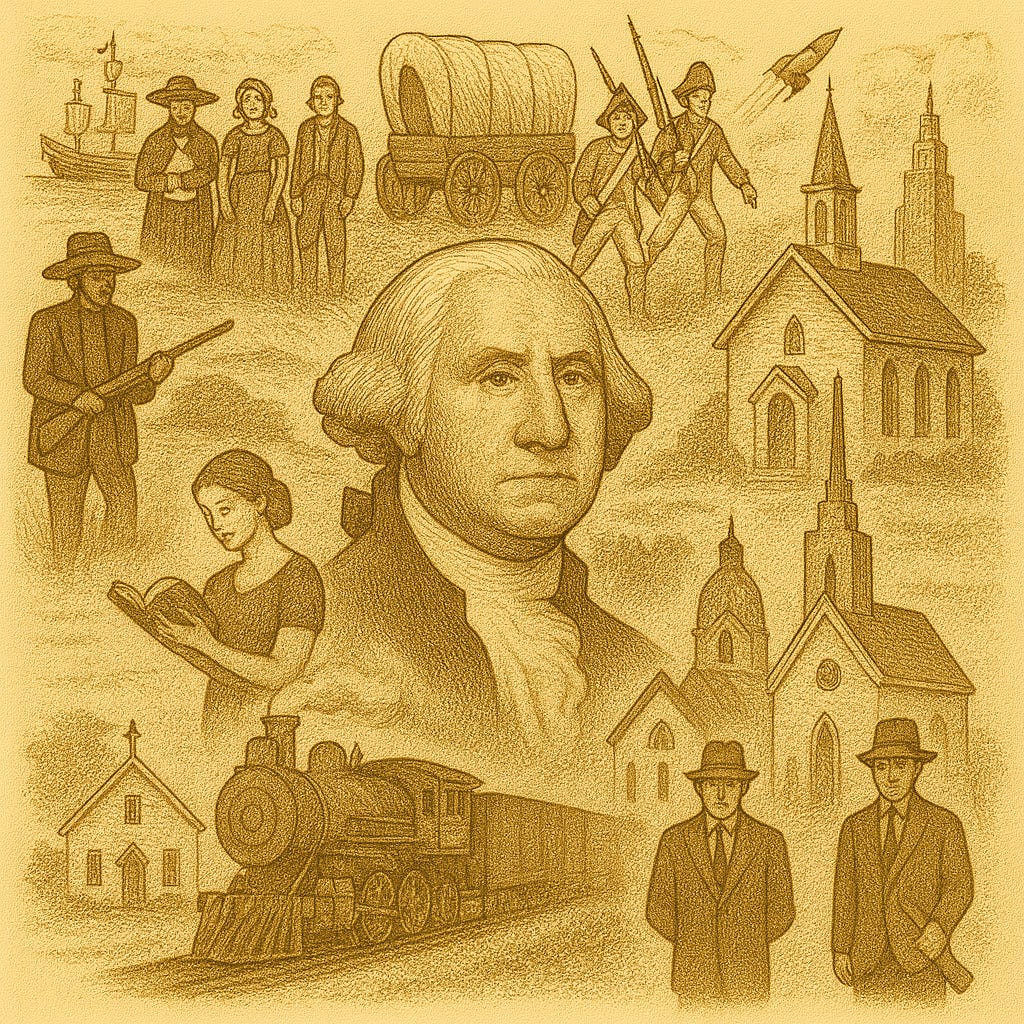
Figure 6. GPT’s interpretation of the concluding paragraph
Also note that while the typical historian sees the private sector always looking out for its self interest, he rarely sees the self-interest of politicians (public choice)
Put another way: the left narrates American history as a series of oppressions calling for state redress; the “right” narrates American history as a series of triumphs stewarded by state leaders. Both reinforce the centrality of government.
GPT suggested these two - and I find those suggestions plausible. I started by thinking the 40th most significant president might be someone like Millard Fillmore, someone whose name you recognize and might have had to memorize but don’t know much about.
Not just a random name. Otis ties for 40th most significant American contributor to technology in Charles Murray’s remarkable survey of Human Accomplishment before 1950 - alongside Leslie Groves, who oversaw the Manhattan Project; George Washington Goethals, who oversaw the Panama Canal; and Edwin Drake, who drilled the first commercially successful oil well. And that’s not even discussing the foreign inventors who dramatically improved life in the U.S.
And I really mean civil society, not just organizing outside of government to force government to act. And what about fixing ourselves?
“According to the great historian of economic growth, Angus Maddison, the annual rate of growth in the Western world from AD 1 to AD 1820 was a mere 0.06 percent per year, or 6 percent per century.” As Robert Gordon vividly portrays it, “A newborn child in 1820 entered a world that was almost medieval: a dim world lit by candlelight, in which folk remedies treated health problems and in which travel was no faster than that possible by hoof or sail.” Or as the economist Steven Landsburg puts it even more starkly: “Modern humans first emerged about 100,000 years ago. For the next 99,800 years or so, nothing happened.” See Rise and Fall of American Growth, reviewed here: https://grantstarrett.substack.com/p/has-anything-really-changed-since. Incidentally, this is a problem for certain classical education models (generally politically conservative) that emphasize history before the industrial revolution.
Frances Fitzgerald, not a conservative, notes in her 1970s survey of textbooks America Revised, “American-history texts are remarkable for their lack of economic analysis. In this most economically successful of societies, a child can hardly discover what a corporation is, to say nothing of the nature of the economy. And it has always been that way.” I am certain that she and I would disagree about what would be the appropriate economic analysis - and that’s part of the reason why textbooks don’t have it - but conservatives should insist on our own.
A conservative historian does not need to explicitly state his own religious identity in his text, though it would be helpful to know to what degree he thinks history reflects God’s will. See my discussion of this question in my essay on Christian homeschooling, starting with “to the degree you teach history” https://grantstarrett.substack.com/p/vocational-training.
In 1985, the Department of Education commissioned the NYU psychology professor Paul Vitz to review public school textbooks and he found that their authors had a “deep-seated fear of any form of active, contemporary Christianity”; further, “He concluded that none of eight sampled secondary school textbooks included “serious coverage” of conservative Protestantism over the past one hundred years and that there was literally no discussion of American evangelical movements since the colonial period.”
“As for the Puritans, the texts manage to describe that most ideological of communities without ever saying what they believed in.” - America Revised. See my review of Worldly Saints: https://grantstarrett.substack.com/p/our-new-world-with-mayflower
Alas, to the degree it is covered, it is framed with a prejudicial covering of the Scopes trial rather than say, an exploration of J. Gresham Machen leaving Princeton.
It is okay - even good - to acknowledge the complexity of race relations getting better, the economy improving… and morals declining. See Shelby Steele’s White Guilt.
How often is modern conservatism really explained as forged in the aftermath of WW2? How often is originalism presented in a way recognizable by its adherents?
A decent specific example of this contrast is child labor. Most histories credit laws for ending the practice when, in fact, as parents got higher wages they drew their children out of the workforce - laws were lagging indicators, and even the ultimate law exempted the farm labor that persisted.
Lincoln got less than 40%
or suggesting the economy triumphed under the good guys and faltered under the bad guys in an exact 1:1 correlation. The economy tends to be more complex.
Try reading some hard left critiques of how conservative America is to see how much worse it could get. Also, we should not ignore our geographic and resource advantages - but also note that really bad policy can screw those things up, e.g. the USSR becoming a net food importer
America Revised
I asked Claude (and other llms): What are the themes that are covered in the typical mainstream history of the United States, in order from most coverage to least coverage? And then: how about for the typical mainstream history of the U.S. 1950-1962? Modern: (1) Slavery and civil rights; (2) War; (3) Founding era; (4) Presidential politics; (5) Economic development; (6) Immigration; (7) Women’s history; (8) Labor history; (9) Indians and U.S. expansion; (10) Other foreign policy; (11) Environmental history; (12) Technology and innovation. 1950s: (1) Great men of politics; (2) Constitutional development; (3) War and the American way of life, especially amidst anticommunism; (4) Manifest destiny and the Frontier; (5) Economic development; (6) The Founding era; (7) The Civil War; (8) Immigration and the melting pot (9) Slavery and Reconstruction; (10) Progressive reforms; (11) Intellectual and cultural history.