
Mistaking prudence for prejudice

The Gist: How taxpayer-subsidized housing drove the 2008 financial crisis.
Part of a series on the 2008 financial crisis. Find part one here and part two here.
In the United States, as John Allison puts it, “there have been more subsidies for housing than for any other economic activity.” To understand how it all blew up, we need to know some history. One might even trace it back to the settling of the West: the U.S. government sold land cheaply and steered much of it to families rather than auctioning it to the highest bidder.
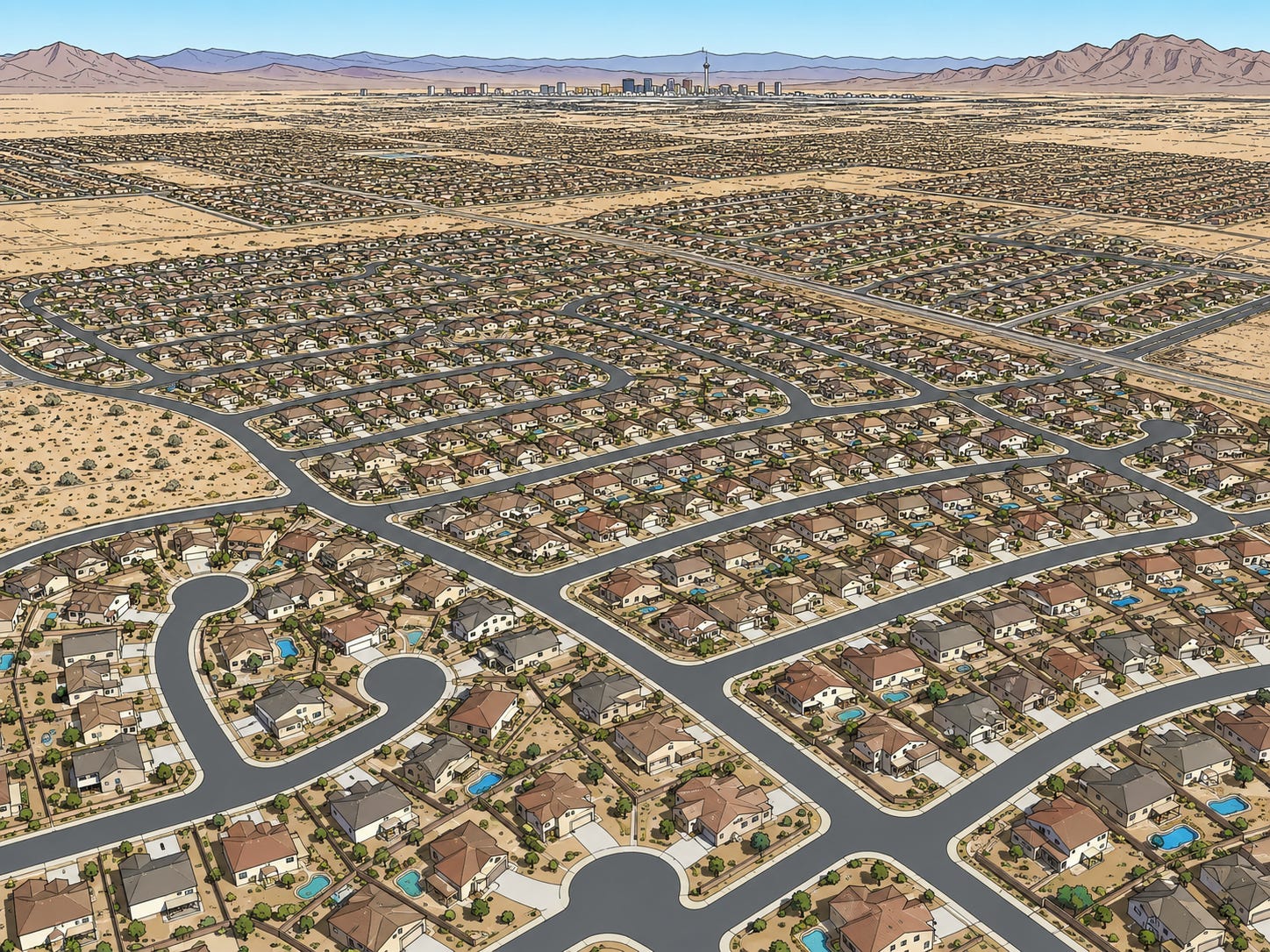
Figure 1. In the 1800s, 160 acres offered not only a home but a lifelong, even multi-generational, business - the financial crisis was built on 1/4 acre lots in Las Vegas subdivisions that many hoped to flip in a year.
FDR supplied the modern machinery of housing subsidy. In 1933, “with roughly a third of all US mortgages in default” and “lenders… foreclosing on one thousand loans every day,”1 the U.S. government created the Home Owners’ Loan Corporation to swap government-guaranteed bonds for distressed mortgages - stabilizing lenders’ balance sheets and keeping families in their homes amidst the (government-fostered) Great Depression that had dramatically altered their ability to pay.2 But this was inherently an emergency measure that relied on the fact that the loans being covered had originally been rationally offered by lenders without expectation of a government rescue. In 1934, Congress created the Federal Housing Administration to insure private mortgage loans, and then in 1938 created Fannie Mae to buy those insured mortgages outright. This socialized default risk and standardized the expectation of a till-then-unheard-of 20-30 year fixed-rate mortgage with low down payment and the ability to prepay. This is so common in the United States today that it is hard to convey how wild this is - for context, around the world, only Denmark offers terms of that length, but with stricter terms and a different (better) funding architecture. Try to think about it from the side of a lender: would you lend a middle-class family most of their net worth in exchange for a rate you can never raise for a time period of three decades - most of their working life - in a currency whose value you cannot predict?
While the GI Bill deepened taxpayer subsidies for housing, two features kept the system relatively disciplined. First, Allison notes that “most government subsidies” before Lyndon Johnson’s Great Society “were targeted at middle-income home buyers” - people who could actually afford the house. In fact, the government was so concerned about losing money that it classified neighborhoods on the basis of likelihood of repayment, “redlining” the highest risk areas and refusing to extend support. Decades later, this practice became notorious for having excluded the vast majority of places where black Americans lived, though “ninety-two percent of homes in the lowest-rated areas for redlining between 1930 and 1940 were owned by whites.”3
Second, “the S&L industry [was] the primary source of financing for housing for almost 50 years (1925–1975)” - and, crucially, Savings and Loans (a type of bank) “held the loans they made on their own books; therefore, when they made a mortgage, its quality was important to them.” The S&Ls provided American consumers with the fixed-rate triple decade loan they had come to expect - and it might still have worked out for them, despite the heavy regulations they operated under, but for the Fed’s inability to keep a stable dollar. By the 1980s, S&Ls’ assets were ravaged by inflation and they were receiving far less in interest payments than what the market was demanding they pay out to depositors. They were allowed to diversify into riskier assets, gambling for resurrection but compounding their problems, ultimately resulting in the largest government bailout as of that time.
In the aftermath, government-sponsored enterprises (GSEs - like Fannie Mae) filled the void the S&Ls left, and flipped the industry from originate and hold to originate and sell. Once a bank could write a loan and immediately sell it onward - booking its fee, passing the default risk down the line - it lost its skin in the game. The incentive to ask hard questions left with the loan, to a party that was more and more distant from the actual borrower. For an alternative, look north: Canadian banks kept owning the mortgages they originated, and none failed during the financial crisis.4
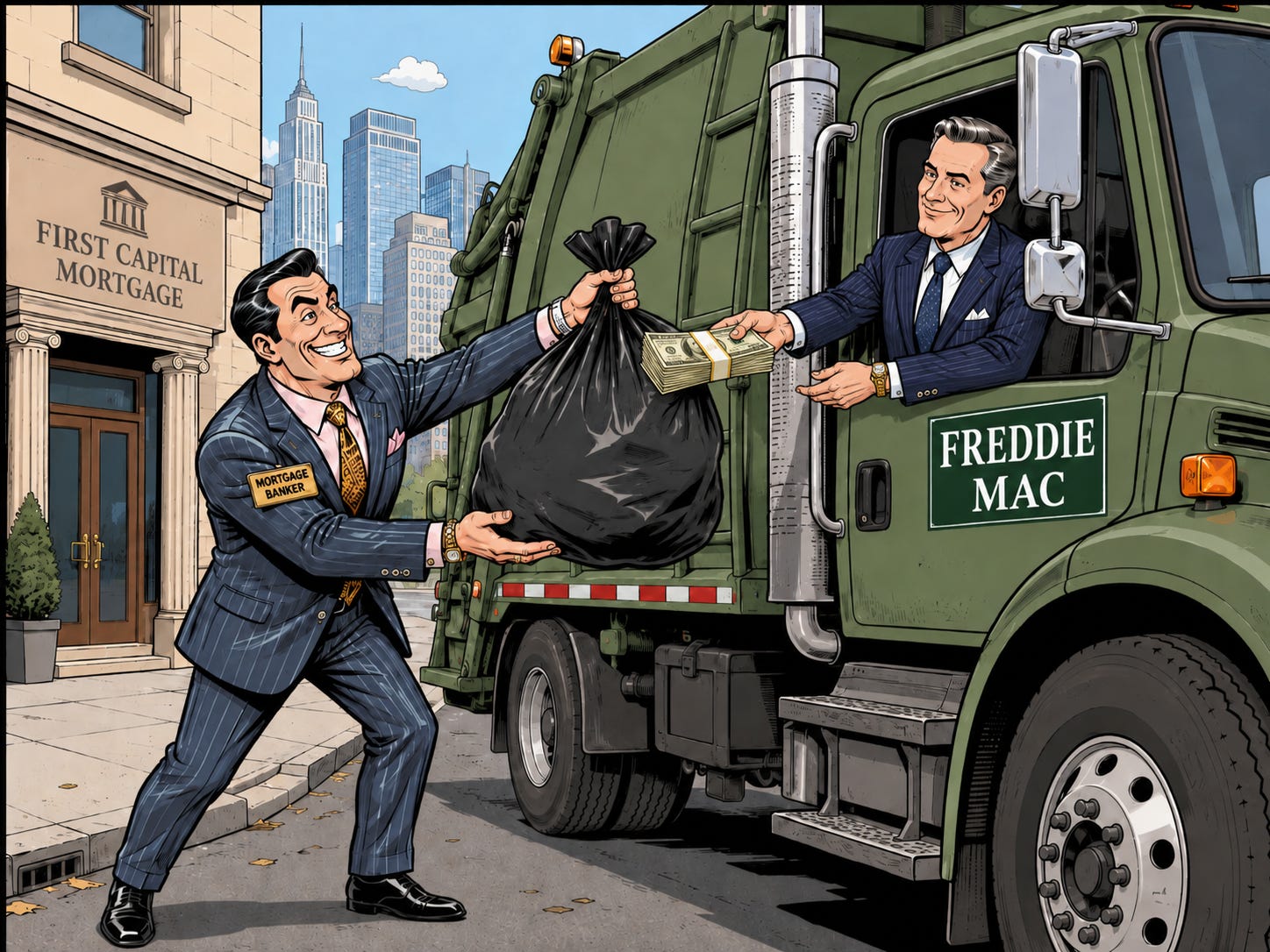
Figure 2. “Don’t open it, that’s how it stays prime.” “Certainly if we bundle enough of them together!”
Had lending standards stayed strict, the hot-potato game might still have worked out - but starting with LBJ, Washington grew eager (and inventive) to turn housing credit into an anti-poverty program, and to root out real racial discrimination with tools so blunt they tore out sound, colorblind underwriting along with it. The government either mistook prudence for prejudice or cynically dispensed credit to favored constituencies and hoped the loans would hold (In 2003, leading Democrat congressman and overseer Barney Frank said: “I want to roll the dice a little bit more in this situation towards subsidized housing.”5) Allison reports that “The Fair Housing Act (1968) and the Equal Credit Opportunity Act (197[4]) were theoretically designed to eliminate racial discrimination. In practice, the laws were used to give banks incentives to make loans to low-income members of minority groups.” But the
“milestone event was the passage of the Community Reinvestment Act (CRA) in 1977. The theoretical purpose of the CRA was to encourage banks to invest in their communities and to eliminate so-called redlining… In order to make acquisitions, open branches, and generally grow its business, a bank must have a satisfactory CRA rating. Community groups often blackmail acquiring banks, pressing them to establish very aggressive low-income loan growth goals in order for the bank’s proposed merger to be approved by the Federal Reserve… The default rates on these low-income loans are extraordinarily high. Many individuals have been given incentives to buy homes they could not afford, particularly when their income was unstable or when they did not have the self-discipline to save for maintenance costs. Seeing the real-world effect on many low-income individuals is depressing… While the dollar amount of loans made under the CRA was not enough to cause the real estate misinvestment, the impact on human action was critically important. It was now a legal and ethical duty of the banks to participate in making high-risk housing loans to low-income buyers who would not meet traditional bank lending standards.”6
Relaxed underwriting should have been a warning; instead it was considered a civic achievement. “Under Bill Clinton, making high-risk home loans to low-income borrowers was given priority over safety and soundness from a regulatory perspective. After all, times were good.” Allison gives a vivid account of what this practically looked like when his bank was accused of racial discrimination by the Clinton administration:
“I was stunned. It was not just against our code of ethics, but also against the fundamental culture of our organization… My first question was, who did the discrimination, so that I could fire that person quickly. Well, it turned out that the regulators did not identify anyone who was guilty of discrimination. It somehow happened without any individual discriminating. Well, how about a bank process or procedure that was at fault? No, all our processes and procedures were fine… So we fought the regulators, with a number of our staff members working seven days a week for weeks. The examiners decided that there was ‘probable cause’ that BB&T was discriminating, and they stopped all our mergers, providing a major incentive to settle. An interesting event then occurred. Two years into Clinton’s term, the Republican revolution happened, with a landslide in Congress. What was amazing was that the bank regulators involved in our racial discrimination examination went home the next day. I repeat, they went home the next day, and we never heard from them on this issue again.”
The pressure soon ran straight through Fannie Mae and Freddie Mac - and it was bipartisan: A 1992 law signed by George H.W. Bush “explicitly empowered” regulators to set explicit “affordable-housing goals” for the two giants - quotas dictating how much of their lending had to go to borrowers below the median income. Under Clinton the quotas climbed and hardened: roughly 30 percent of GSE purchases in 1993, 40 percent by 1996, past half by the mid-2000s, 55 percent by 2007.7 Republicans floated the occasional reform that died in committee, then cheered the climbing ownership rate like everyone else: George W. Bush ran on the “ownership society” in 2004.8
Importantly, “below median income” does not necessarily mean lending to someone who can’t afford it. Banks can still responsibly lend to lower-income families with steady paychecks and clean credit - but there are only so many of them. The trouble came when the quotas grew so large that Fannie and Freddie could no longer fill them with creditworthy lower-income borrowers and began shaving the requirements on credit scores, debt, down payments, and documentation (hence “liar loans”). And once the two giants would buy such loans, every lender who fed them had a reason to make more.
The racket was helped by the fact that Fannie and Freddie were not straight government agencies; LBJ had spun Fannie off the federal books in 1968 to hide its debt, leaving a peculiar hybrid - a company with private shareholders and richly paid (extremely politically connected) executives9, floating on an unwritten (but understood) promise that Washington would never let it fail. They guarded the arrangement as you’d expect: Fannie and Freddie were among Washington’s heaviest lobbyists, spending tens of millions on both parties in the decade before the crash10, and when Congress staged “oversight,” members were quietly reminded how many mortgages in their own districts the GSEs stood behind. To give a prominent example among many instances of patronage, Fannie Mae hired Barney Frank’s boyfriend in the early 1990s.

Figure 3. 🎵 Private enough to pay yourself well, public enough that the bonds will sell, political enough that no one can tell - that’s our GSE! 🎵 Private enough to lobby the Hill, public enough to mail you the bill, political enough to dodge every ill - that’s our GSE! 🎵 Private enough when the profits roll in, public enough when the losses begin, political enough that it’s never a sin - that’s our GSE! 🎵
Guaranteed by Congress in exchange for meeting affordable housing goals, Allison argues the GSEs went hog wild:
“Freddie and Fannie traditionally operated with a leverage ratio of 75 to 1. Banks have a leverage ratio on loans of 10 to 1. Even before they experienced severe financial problems, Fannie and Freddie were operating with a leverage ratio of about 1,000 to 1. That is, for every $1 of equity, they had $1,000 of debt. How would you feel about your financial position if you had a net worth of $10,000 and owed $10,000,000?... (Of course, when they failed, their leverage was infinite, since they owed more than their assets were worth.) Freddie and Fannie’s total liabilities, including loan guarantees, were approximately $5.5 trillion (including $2 trillion in subprime mortgages).”
Additionally, some private lenders were desperate to find their own corner of the marketplace and pioneered “pick a payment” mortgages - in which a family good for $750 a month was cleared for a house that would demand $1,000 a month, on the premise that they could work toward it, never mind the increased taxes and upkeep. The NINJA loan exploded: no income, no job, no assets, no problem. Many of those buyers didn’t mind because they were just looking to flip the home to the next buyer - and, if (when) things went badly, they could just throw in the keys without additional recourse. The most notorious originator, Countrywide, whose loans Fannie bought in bulk, ran a VIP loan program of discounted, fast-tracked and under-underwritten mortgages personally blessed by its CEO Angelo Mozilo. “Friends of Angelo” included Democrat Chris Dodd, eventual chairman of the Senate Banking Committee, and Housing and Urban Development cabinet secretaries for both Clinton and George W. Bush (Clinton’s joined Countrywide’s board of directors).
Such lenders (and fraudulent borrowers) were some of the worst actors of the crisis and they deserved pain, not bailouts. Anger at them fuels the standard analysis of the 2008 financial crisis: the government did not make the worst loans, private players did. By the peak later years, independent mortgage shops and Wall Street banks, operating outside the GSEs and untouched by the CRA, were originating and securitizing the great bulk of the toxic mortgages, even as Fannie and Freddie were losing market share. There is real force in that - but it confuses who struck the match with who filled the room with gas. Notice that “losing market share” measures who issued the securities, not who funded the mania: even as private labels out-issued them, Fannie and Freddie were among the largest buyers of private-label paper - purchases that conveniently counted toward Congress’s affordable-housing quotas. And those quotas dragged the entire market down-market: once the government’s two giants were compelled to put 55 percent of their lending below the median income, they lowered the bar for everyone, and the private players colonized the wreckage beneath it. The federal government created the moral, legal, and financial environment in which unsound lending became not only permissible but praiseworthy. Homeownership was promoted as a political entitlement, the Federal Reserve seemed ready to preempt every crisis, regulators were more concerned with politics than soundness. Blaming the market is like blaming the driver for speeding while ignoring that the state subsidized his gas, promised to fix any wreck for free, and paid him a bonus for every mile over the limit.
Crucially, all the government support for housing was very popular: everyone felt like they were getting help! Few understand that if you help one buyer, he may win the house he desires but if you help all buyers, the seller wins: prices go up. And direct subsidies and loan guarantees were not the only ways the government incentivized housing: interest payments for mortgages were (are) deductible from income taxes, “The Taxpayer Relief Act of 1997 excludes from taxation capital gains on a personal residence, up to $250,000 for an individual or $500,000 for a couple, while leaving in place the twenty percent capital gains tax on all other investments.”11 The government incentivized people to buy the extra bedroom rather than buy stocks.
And yet what has happened to the government-sponsored enterprises? They were nationalized and are still around, still guaranteeing loans, still facing pressure to extend credit beyond prudential lending standards. Home prices have not corrected to their long-term trend through the 1990s. And housing remains the most subsidized economic activity in America.
Figure 4. Beyond the books I mentioned in the introduction: Peter Wallison, who had served as both Ronald Reagan’s White House counsel and later was one of the Republican dissenters on Congress’ Financial Crisis Inquiry Report, goes so far as to argue in his book Hidden in Plain Sight that the federal affordable housing policy was the primary cause of the financial crisis.
George Selgin, False Dawn
About 1 in 10 Americans at the time were members of Building and Loan Associations, a kind of mutual aid society, a portion of which otherwise would have gone bankrupt.
Jeremy Carl’s Unprotected Class. Redlining is complicated, even if the prevailing issue was not to lose too much money: FDR’s New Dealers also drew the lines with racial homogeneity as an expectation and goal. Black Americans were also far less likely to own their homes in the first place. Selgin notes that the government was a more favorable to minorities than private lenders: “A 1940 census showed that 4.5 percent of all HOLC mortgages went to nonwhite borrowers, as compared to 2.5 percent of mortgages from other lenders”
Charles Calomiris’ Fragile by Design argues that banking instability is a coalition bargain between politicians needing credit-allocation tools and bankers seeking protected rents - and Canada has the better bargain: banks get to be big (natural) oligopolies that have always branched anywhere in exchange for sole federal jurisdiction and paying higher taxes.
“To those who warned of the risks in the new policies, Frank replied in 2003 that critics “exaggerate a threat of safety” and “conjure up the possibility of serious financial losses to the Treasury, which I do not see.” Far from being reluctant to promote risky practices, Frank said, “I want to roll the dice a little bit more in this situation.”” https://www.deseret.com/2010/10/21/20148021/thomas-sowell-no-one-contributed-more-to-housing-bust-than-barney-frank/
Others are very insistent that the CRA did not cover institutions that made about half of subprime institutions and similar statistics - but Allison argues that those miss the point of the transition in banking away from sound lending.
Howard Baetjer Jr.: “In the words of Russ Roberts, ‘In 1993, 30 percent of Freddie’s and 34 percent of Fannie’s purchased loans were loans made to individuals with incomes below the median in their area. The new regulations required that number to be at least 40 percent in 1996. The requirement rose to 42 percent in 1999 and continued to rise through the 2000s, reaching 55 percent in 2007. Fannie and Freddie hit these rising goals every year between 1996 and 2007.’ In order to meet these mandatory targets, Fannie and Freddie loosened their lending standards for loans they bought and guaranteed, and for the loans in the mortgage-backed securities they bought. Banks and other mortgage originators, knowing they could sell lower-quality loans to Fannie and Freddie, lowered the soundness standards they required of borrowers. Increasingly they made loans to borrowers with lower credit scores, with higher ratios of their mortgage payments to their monthly incomes, with less (or no) documentation of their incomes (this reduction in standards was an invitation to fraud), with higher ratios of other debt to their incomes, and with smaller down payments.”; Allison: “Several economists pointed out that the legitimate affordable-housing market was not big enough to equal 50 percent of the giant loan portfolios of Freddie Mac and Fannie Mae. In order to meet this political goal of the Clinton administration, Freddie and Fannie would have to consistently lower their lending standards… The irony is that the internal staff at Freddie and Fannie did not want to go after this market. They knew that with their organizations’ very high financial leverage, this subprime strategy was incredibly risky. Both companies had survived by making only lower-risk loans and had low loan loss ratios. Their operating formula was not designed for high-risk affordable-housing lending. However, Congress was not going to continue to guarantee their debts unless they met the subprime goals, and if it did not do so, they would be out of business. They had no choice but to cooperate.”
Also in 2002, George W. Bush proclaimed “I set an ambitious goal. It’s one that I believe we can achieve. It’s a clear goal, that by the end of this decade we’ll increase the number of minority homeowners by at least 5.5 million families. Some may think that’s a stretch. I don’t think it is. I think it is realistic. I know we’re going to have to work together to achieve it. But when we do, our communities will be stronger and so will our economy. Achieving the goal is going to require some good policies out of Washington. And it’s going to require a strong commitment from those of you involved in the housing industry. https://fee.org/resources/the-house-that-uncle-sam-built
The perfectly named Franklin Delano Raines - CEO of the entity FDR's New Deal created - earned tens of millions over six years amid an accounting scandal in which, regulators found, managers manipulated earnings to trigger their own bonuses. The fines and forced restatements left a weakened Fannie even more dependent on the congressional patrons who shielded it.
Allison: “Freddie and Fannie were huge contributors to both political parties. Between 1998 and 2008, Freddie Mac spent $94.9 million and Fannie Mae spent $79.5 million to lobby Congress.” Wikipedia: “Dodd was the top recipient in Congress, followed by John Kerry, Barack Obama, then Hillary Clinton, of campaign funds from Fannie Mae and Freddie Mac during 1989–2008.”
Howard Baetjer Jr’s Free Our Markets