
The Answering Machine

The Gist of Cyberschooling: Curated technology can do things unimaginable and impossible to previous generations of education thinkers
Part of my How Homeschool? Series and the first installment of Cyberschooling. Find part two and part three here.
If the world’s very best experts were available to teach your children, would you use them?
Cyberschoolers would argue they are. “The Great Explainer” Richard Feynman’s legendary introductory Lectures on Physics are free to read. The winsome Milton Friedman can walk you through basic economic ideas on Youtube.1 You can instantly search for Biblical passages relevant to your life right now in a variety of translations. MIT, one of the most selective universities on the planet, has put lectures, reading lists, and exams online for over 2,500 courses. None of this costs money. It costs something rarer these days: sustained attention, and the wisdom to choose, sequence, and digest what matters.
The trouble - with watching videos, even reading books - is that they are not interactive. You passively consume and think you understand, but that understanding is not clarified by your own lingering questions nor tested by questions posed to you. Yet Silicon Valley’s Oxford- and Columbia-trained “Adam Brown, who does physics at a world class level… said that if he had a question about something, the best answer he would get is from calling up one of a handful of world experts on the topic. The second best answer he would get is from asking the best AI models.”2 AI models are infinitely patient and can also adapt their answers to the level of understanding appropriate for a child (or an over-extended parent), while quizzing and evaluating understanding (if you direct them to).
I personally use LLMs (large language models) every day and I sympathize with the UChicago professor Agnes Callard who wrote, “LLMs made me realize that my whole life, I had been asking A LOT fewer questions than I wanted to be asking.”3 How many questions do your children have that go unanswered - or never asked?

Figure 1. What color is a mirror? If you clean a vacuum cleaner, are you a vacuum cleaner? What do hawks think about when they’re not hungry?
A longtime dream has been to deliver quality education at scale. Schools tried to do it by concentrating students around great teachers, but a teacher’s attention is finite. Books solved the geography problem but were very expensive until the printing press (and, again, lacked interactivity). As schools proliferated toward universal education (and, arguably, supervision), average teacher quality inherently became more variable, if not outright declining. Some imagined Thomas Edison’s phonograph would be primarily used for business dictation, audiobooks (for the blind), sermons. When the television was invented, some thought it would be perfect for the most brilliant people to deliver lectures en masse. When the internet arrived, it delivered an information revolution.
But while the first book off the press was the Bible, today’s bestsellers are beach reads, smut with a spine, self-help that we hope is not actually self-harm (this, despite the fact that relatively few people read books). The phonograph precipitated not a new great awakening, but a pop music soundtrack to our lives. Sitcoms and sports draw viewers; professors have usually been stuck on the channels that only exist because the government forced taxpayers to fund them. The sum of human knowledge is available in the palm of every hand, but people mostly shop, watch cat videos, or attempt to satisfy more primal urges. Even when I was a student at Stanford, at least among the fuzzies, there was considerably more discussion in the cafeterias as to what to wear to the next themed party than of serious intellectual ideas; few students did all the reading for their classes. They did not have to. The brand name of their degree would propel them forward. Every new medium promises enlightenment; incentives usually steer it toward entertainment. Leaning into the internet can give you Richard Feynman, incredible, original footage of Apollo 11, or… a cartoon about how the moon landing was faked. LLMs may be able to finally deliver quality (interactive! personalized!) education at scale… if you’re not busy changing a photo of yourself into a samurai space pirate.
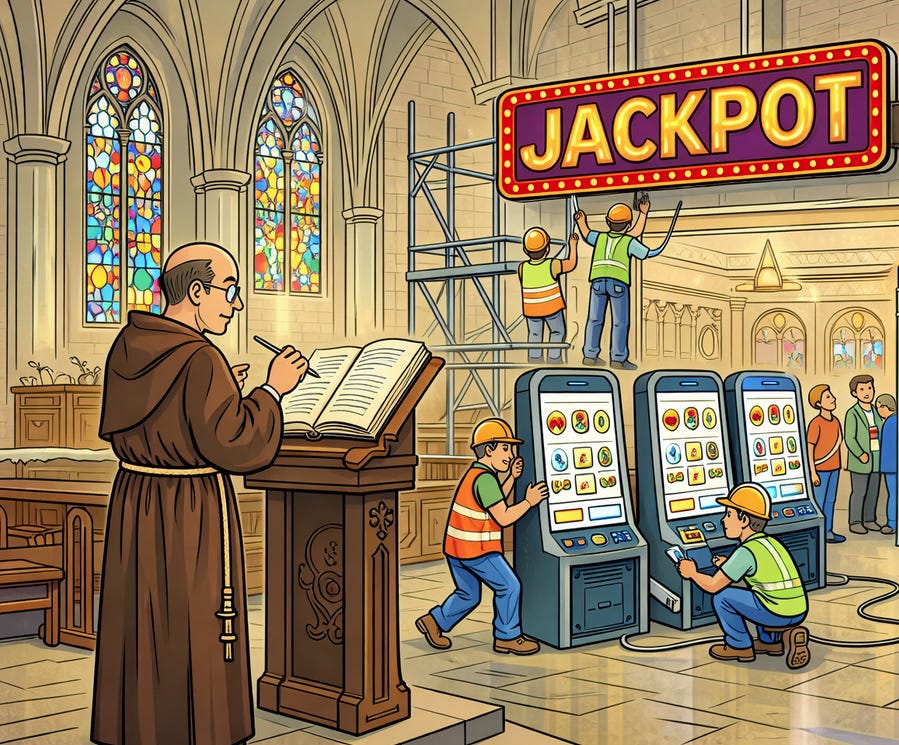
Figure 2. We keep inventing cathedrals of knowledge and turning them into casinos. Marshall McLuhan would argue that the “medium is the message” and that some media (books) are more likely to transmit genius than industrialize distraction (television). The question is: what are LLMs?
Relatedly: the promise of LLMs is that they might personally tutor you to learn; the peril of LLMs is that they do all the work for you, skipping the struggle that builds skill.4 Because, unlike basically every other approach I’ve discussed, cyberschooling can be so easily abused by students, overseers must be absolutely vigilant in ensuring children actually learn. If you give your kid a book to review, their mind may wander, they may skim, but they can’t just make up a summary for you in seconds.5 If you give your kid paper math worksheets, they may make errors, but you will get an honest result of their efforts. A computer, however, can easily be manipulated - and your kids will probably be more tech savvy than you.
If you do want LLMs at their best, do not rely on their (free) defaults. LLMs don’t automatically provide the structure of a comprehensive (or desirable) education. You have to ask them, and occasionally force them to keep on track (especially to avoid just flattering you).6 You need custom instructions to guide the medium toward your goals - while knowing a clever student can manipulate those too. And specific prompts matter. Sal Khan gives a good example of the kind of prompt you’d want: “I’d love you to tutor [my son] on this math problem, but don’t give him the answer. You can ask questions and nudge him in the right direction, but I really want to make sure he understands it himself.”7
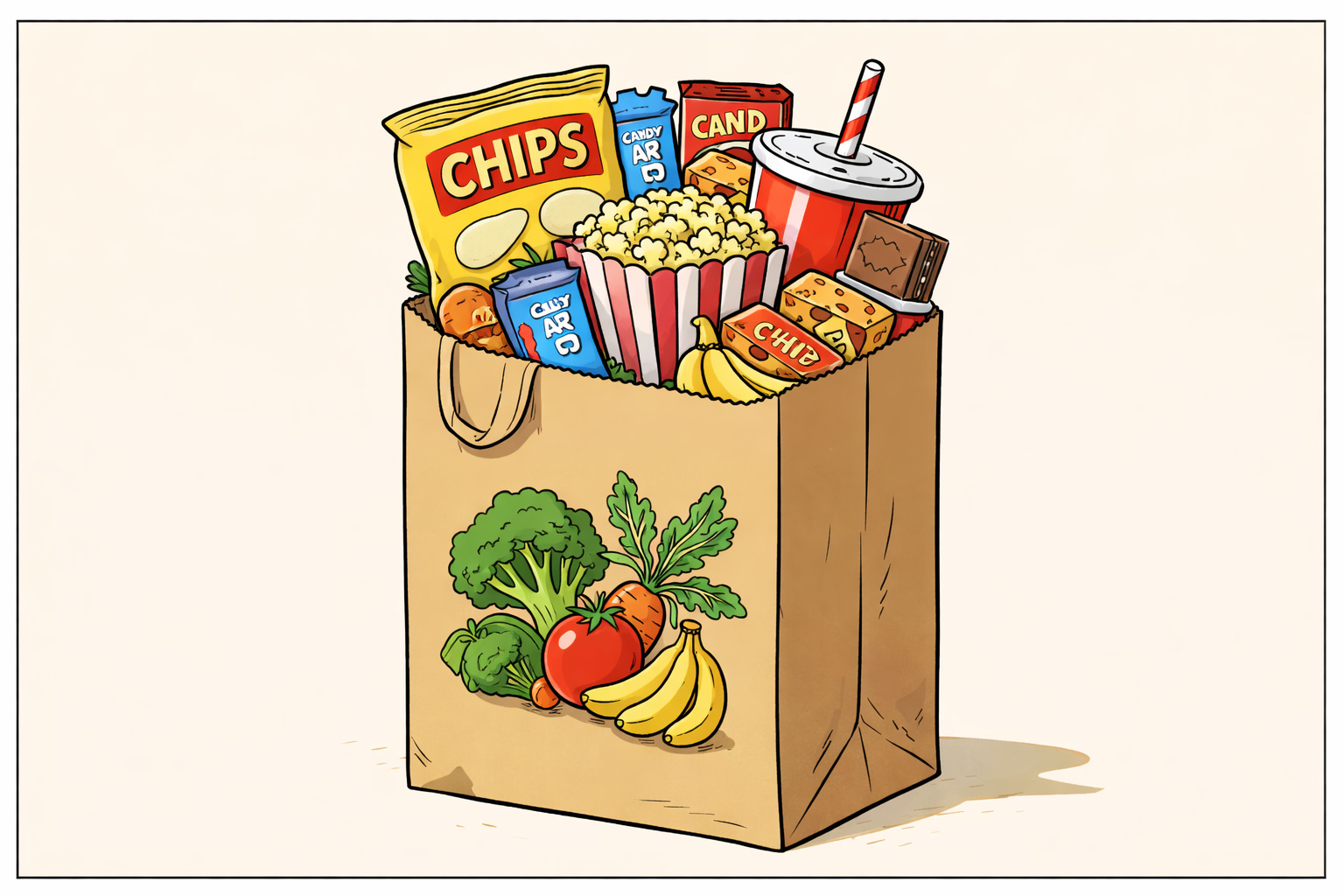
Figure 3. Unlike an algorithm which just operates off your revealed preferences, you can at least ask an LLM to get closer to your aspirations. Netflix switched from a star rating system to up/down because they wanted people to spend more time on the platform and discovered that people gave 5 stars to a documentary and 3 stars to an Adam Sandler movie but would watch the latter 10x more
You also have to beware that overconfident LLMs make mistakes, as a number of attorneys are finding out as they get reprimanded by courts for citing nonexistent cases. You can mitigate this by demanding sources and with habits of verification, but it is not bulletproof nor foolproof. I am personally very sympathetic to the argument that calculators have really ruined math skills (including my own), and that children build arithmetic fluency before touching them. A similar argument might be made that children should read a lot of high quality books before really using LLMs so that they can have a sense of when something is off and not just accept whatever the computer spits out. But the tradeoff is more significant: the LLMs can help children understand the high quality books they’re reading in a way that a calculator never helps someone understand math.
Beyond factual errors, LLMs have biases. While some react to a cyberschooling education by claiming it’s soulless, it can be worse than that. A hammer does not respond to your attempt to swing by saying “oh you really should not be building a church that does not allow gay marriage in its sanctuary, so therefore I cannot help you.” The default response of the LLM is more or less center left, though the earliest versions, coming out at the tail end of the woke era, were heavily self-censored, and that could easily come back again. (One interesting experiment is trying to train LLMs only on material before a certain date, like 1913, which, if not given additional modern guardrails, would be a fascinating corrective to modern biases, but would be subject to its own obvious problems).
Thanks for reading! Tune in next week for part two of Cyberschooling.
Free to Choose is a splendid series that features Friedman explaining economic principles - and then debating opponents about them - but it will not be remotely sufficient to get a 5 on AP Microeconomics and AP Macroeconomics. That being said, you can take Micro and Macro with Marginal Revolution University (from the amazing George Mason University econ department) and be well on your way: https://mru.org/
“Yes, it does cost $200 a month. It is worth that sum to converse with the smartest entity yet devised.” https://marginalrevolution.com/marginalrevolution/2025/02/o1-pro.html

“I gave AI control of my computer and asked it to “solve homework 1 of Stanford discrete math class (Math 61DM)”. It found the problem set, downloaded Latex, solved every question, and compiled it to a PDF... in FIVE minutes. Will any college student ever do homework again?”


Obviously, in institutions, kids have resorted to all kinds of ways to avoid work - copying off other children or buying Sparknotes or reading Wikipedia. But in a homeschool environment, that can be rather dramatically curtailed. And regardless: LLMs reduce the friction of cheating to near-zero and produce personalized, original-seeming output rather than canned summaries a teacher might recognize.
There have also been some rare cases of truly disastrous interactions with LLMs in which probably mentally unstable people have been inspired by LLMs to bad behavior, including violence. See the man who fell in love with the LLM and killed himself.
